Catholic Sendai Diocese Newsletter No.29 Issue(265)
Table of Contents
Young People – Walking with Christ and with the Church
Fr. Armando Tumaliuan Romero,
Youth Ministry, Diocese of Sendai
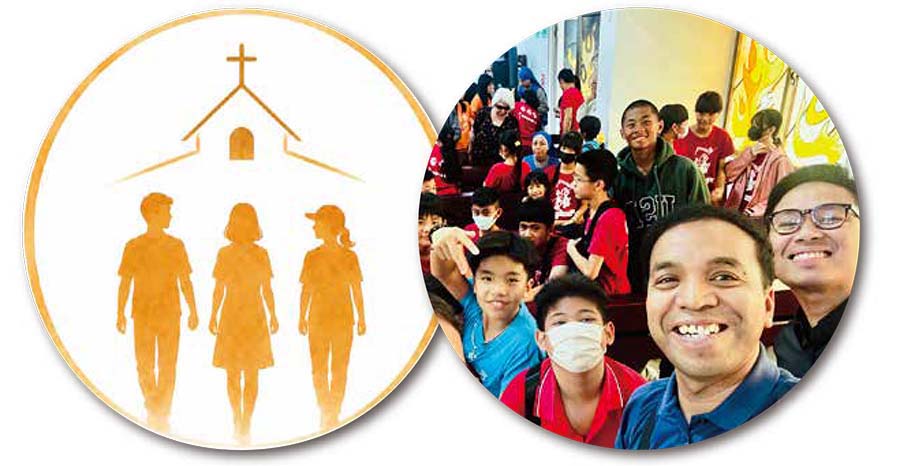
Allow me to greet you all for the first time. My name is Armando Romero Tumaliuan. In September of last year, I was assigned to the Diocese of Sendai by my religious congregation, the Congregation of the Immaculate Heart of Mary (CICM). I have been entrusted with the pastoral care of the Sendai Nanbu(Southern) Bloc of District 4, serving both Ipponsugi Church and Tatamiyach.
Recently, Bishop Edgar Gacutan appointed me as the priest in charge of the Youth Ministry of the Diocese of Sendai. I accepted this appointment with humility. I imagine that one of the reasons for this mission is that, at 43 years old, I am still relatively young. Drawing on my limited experience of accompanying young people, the joys, hopes, and struggles they have shared with me, as well as the guidance of the Church and the words of the Holy Father, I hope to reflect deeply on how we can walk together with our youth.
I sincerely look forward to your support and cooperation.
Whenever I see young people in the Church, I feel encouraged. Their presence–praying, serving, laughing, and even struggling in faith–reminds me that the Church is alive and that God continues to sow seeds of hope in young hearts. As Pope Francis writes in Christus Vivit, “The Church needs your momentum, your intuitions, and your faith” (299). Young people are not only the future of the Church; they are already building the Church today through their gifts, service, and witness.
What It Means to Live in the Church
– A Place of Belonging
Many young people carry unseen burdens: academic pressure, social expectations, anxiety, and loneliness. The Church should be a place where they can rest, be accepted, and know they belong simply because they are children of God. Jesus’ invitation, “Come away by yourselves… and rest a while” (Mark 6:31), speaks to them today.
At a symposium on youth ministry, a young woman shared that hearing, “The future of the Church is in your hands,” often felt like a burden rather than an encouragement. Her words remind us that before asking young people to take responsibility, the Church must first become a place where they feel safe, welcomed, and genuinely heard.
What It Means to Live for the Church
– Sharing in the Mission
Pope Leo XIII taught that the future of society depends on the formation of young people (Sapientiae Christianae, 14). We see this in the way young people serve through music, outreach, friendship, and parish life. Their creativity, honesty, and generosity bring new life to the Church. Their service is not simply helping; through their words and actions, they proclaim the Gospel and participate in the Church’s mission today.
What It Means to Walk Together with the Church
– A Synodal Journey
The Church is called not only to welcome young people but also to walk with them by listening and accompanying them. Youth ministry begins with relationships, not simply programs. The theme of World Youth Day Seoul 2027, “Take courage; I have already overcome the world” (John 16:33), reminds young people that Christ walks with them through every fear and uncertainty. To journey together means assuring them that they are never alone.
A New Breath of Youth Ministry
Young people grow in faith through Bible sharing, Eucharistic adoration, fellowship, and simple moments of community. In these encounters, they discover both Christ and their vocation. As the Church believes in and nurtures young people, it is renewed as well.
Toward a Church That Believes in Young People
Pope Francis calls young people “the now of God” (Christus Vivit, 178). Their faith, questions, and hope remind us that God continues to work in our world.
To live in the Church is to know, “It is good that I am here.” To live for the Church is to offer one’s gifts in service. To walk together with the Church is to accompany one another in faith.
May we become a Church that welcomes, listens to, and journeys with young people – a Church that reflects the heart of Christ and grows together with them.
I have shared these thoughts as a way of beginning a conversation with all of you, and I am grateful for this opportunity. I hope that when we meet, we will be able to share our thoughts and reflections together.
Thank you very much, and I look forward to working with all of you.
Bishop’s Diary
May 29 – June 1, 2026 : Visit to Vietnam
Sendai Diocese has two Vietnamese seminarians undergoing priestly training in their home country. I visited them, their respective formators, families, parishes and bishops from May 29 to June 1.
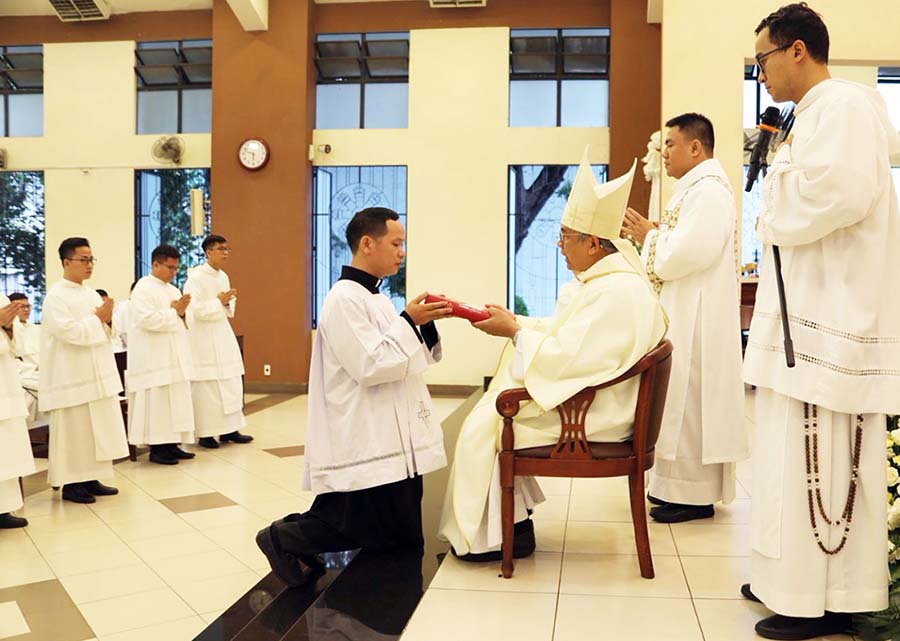
Joseph Nguyen Van Tuan, born in April 1988, is from the Diocese of Vinh. During my visit I installed him and seven Dominican seminarians to the ministries of lector and acolyte. Tuan is expected to finish his theology studies at a Dominican seminary in Ho Chi Minh City in May 2027 and come to Japan some months later to complete his formation.
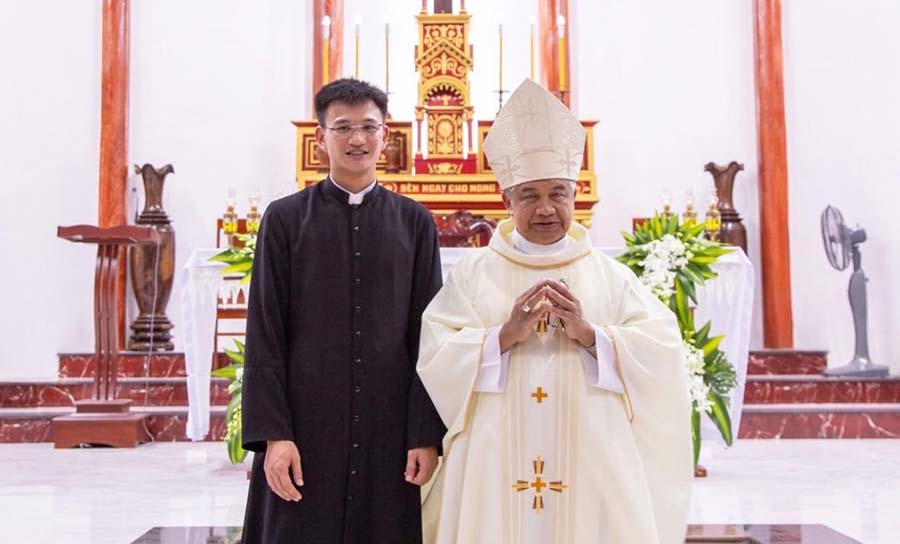
Anton Nguyen Dinh Quang, born in November 1999, is from the Diocese of Ha Tinh. He first came to Japan as a technical intern in 2019. He went back to Vietnam in 2023 to undergo the first (two-year orientation) and second (two-year philosophy course) stages of his priestly formation at the Saint Francis Seminary in Vinh. He is expected to finish his second year of philosophy in May 2027 and come to Japan some months later to undergo the third stage of his formation (one-year Japanese language study and four-year theology course).
During my visit, I celebrated Sunday Mass at the parish churches of both seminarians. I was impressed by the presence of many young people in the celebration and how lively the communities were. I am grateful that our diocese shares from the blessings of the Catholic Church in Vietnam.
Learning About “Multicultural Pastoral Ministry”
The first Pastoral Ministers’ Meeting of the Sendai Diocese for fiscal year 2026 was held on April 27 at Mototerakoji Church. Bishop Michiaki Yamanouchi of Saitama Diocese spoke on the theme “Multicultural Pastoral Ministry.” Twenty-eight priests and lay pastoral workers attended the gathering.
Bishop Yamanouchi explained that the concept emerged from the recent organizational restructuring of Catholic Bishops’ Conference of Japan. The new “Committee on Multicultural Pastoral Ministry”, which Bishop Yamanouchi chairs, would like to focus on the pastoral care of culturally diverse communities. The former committee tended to put its attention on justice and human rights issues of migrants, which are now addressed by the new “Commission for Life, Peace, and Human Rights.”
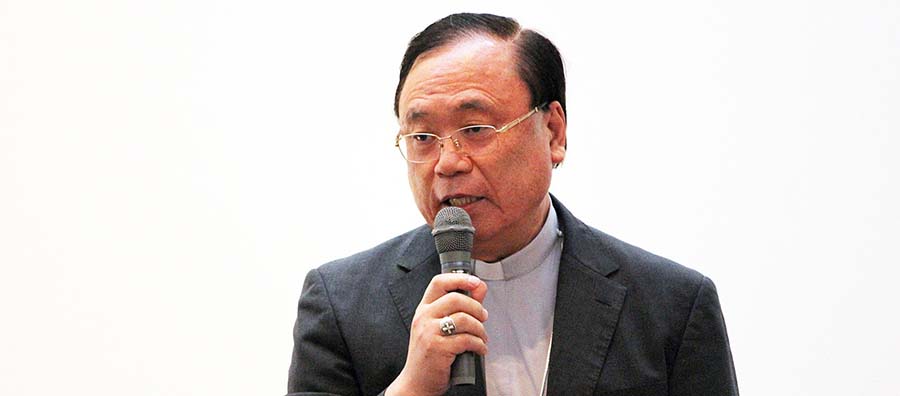
Bishop Yamauchi stressed that Catholics of different nationalities should not be regarded as “foreign faithful,” but as brothers and sisters united in the same faith. Although languages and cultures differ, all are called to journey together in the spirit of synodality.
Drawing from his own experience of emigrating to Argentina as a child, Bishop Yamanouchi reflected on the challenges migrants face and the importance of welcoming them into the life of the Church.
He concluded by describing Japan’s growing multicultural population as a gift and an opportunity. By embracing unity in diversity, the Catholic Church can become a powerful witness of the Gospel and a sign of hope for Japanese society.
Reading The Synodal Church
The second Pastoral Ministers’ Meeting of the Sendai Diocese for fiscal year 2026 was held on May 25 as part of the ongoing formation program for priests and lay pastoral workers. The session, entitled “Let’s Read ’The Synodal Church’”, was led by Fr. Hiroshi Konishi, OFM, a member of the Special Synod Team of the Japan Bishops’ Conference and a key figure in promoting synodality in the Catholic Church in Japan.
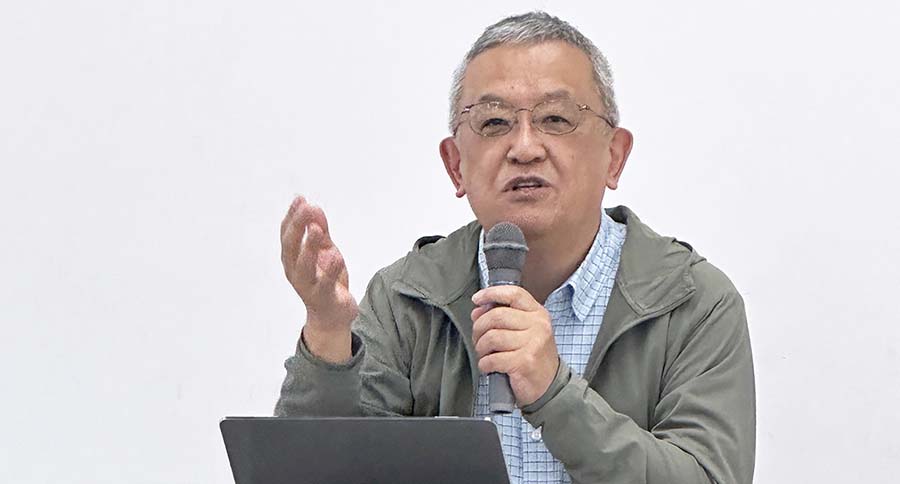
Fr. Konishi introduced the Japanese edition of the Final Document of the 16th Ordinary General Assembly of the Synod of Bishops, “The Synodal Church: Communion, Participation, and Mission”. He acknowledged that Vatican documents are difficult to read. He encouraged the participants to read and reread them in light of Japan’s pastoral reality and not as abstract theological texts.
He emphasized that synodality means living communion, participation, and mission in ways that fit the local Church. Drawing from his experience as a parish priest, he described how communities naturally practice synodality by praying together, listening to one another, sharing fellowship, and building mutual trust.
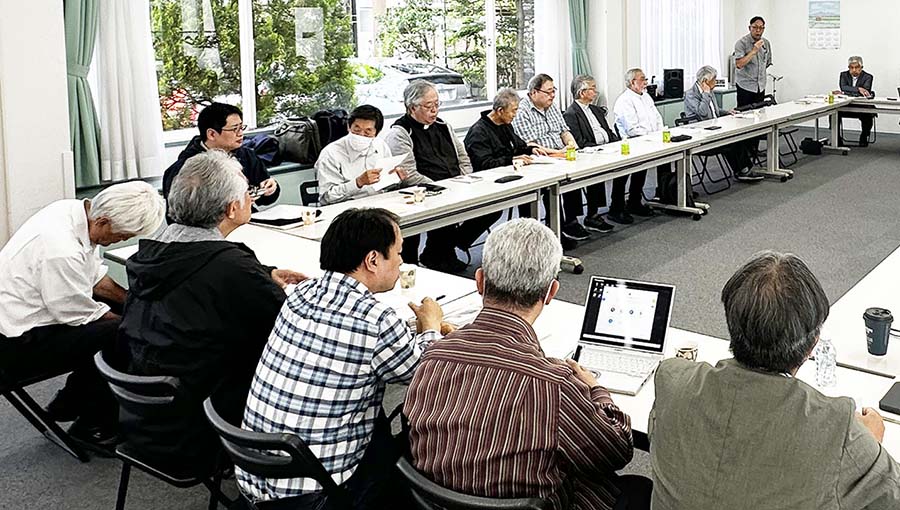
Fr. Konishi concluded that the Synod’s Final Document is an invitation to renewal. Rather than relying on top-down decision-making, the Church is called to discern together, listen deeply, remain rooted in Holy Scriptures, and respond faithfully to God’s call through small but meaningful steps in everyday parish life.
Launch of the Diocese of Sendai’s Commission or Life, Peace, and Human Rights
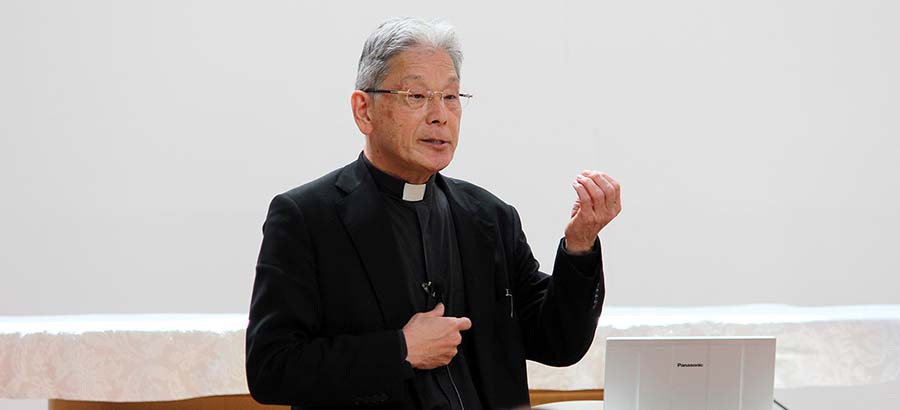
On May 9, 2026, the Diocese of Sendai held its 13th Study Session on Life at Mototerakoji Cathedral, bringing together about 70 participants. The event commemorated the establishment of the Commission for Life, Peace, and Human Rights, following the reorganization of the Catholic Bishops’ Conference of Japan. Five former advocacy groups, the Justice and Peace Council, the Committee for Refugees, Migrants and Displaced People, the Committee on Buraku Discrimination and Human Rights, the Office for the Protection of Children and Women’s Rights, and the HIV/AIDS Section, were integrated into one commission.
Bishop Edgar Gacutan, in his welcome address, announced that the Sendai Diocese had also established its own Commission for Life, Peace, and Human Rights in line with the organizational structure of the Japan Bishops’ Conference. Bishop Shinzo Moriyama, Chair of the Social Commission of the Catholic Bishops’ Conference of Japan, delivered the keynote address entitled “Why Does the Church Engage in Social Issues? Reflecting on Peace through Synodality.”
Bishop Moriyama explained that the Church’s concern for social issues flows directly from the Gospel and the teaching of the Second Vatican Council, which calls Christians to share in the joys, hopes, sorrows, and anxieties of all people, especially the poor and vulnerable. He stressed that authentic peace (shalom) is much more than the absence of war; it signifies wholeness, right relationships with God and others, justice, reconciliation, and the fullness of life.
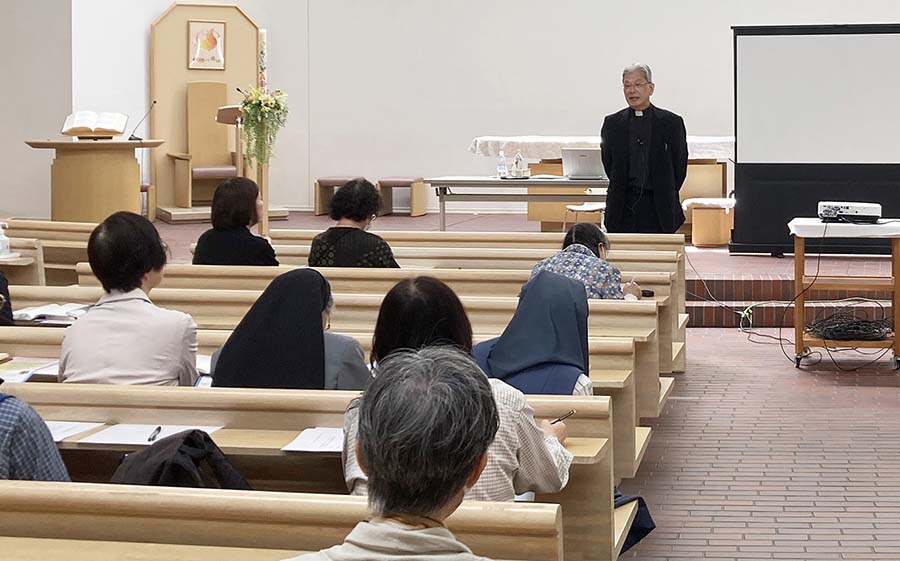
Drawing on Scripture, he showed that peace cannot exist without justice, especially respect for the dignity and rights of the weak and marginalized. Christ’s sacrifice on the cross restored humanity’s relationship with God, making Jesus the true source of peace. Bishop Moriyama concluded by encouraging Catholics to become peacemakers who build justice, reconciliation, and hope, living out the Gospel through synodal collaboration and active concern for human dignity.
NEWS FROM THE DISTRICTS
District 1
First District Gathering Held After 12 Years
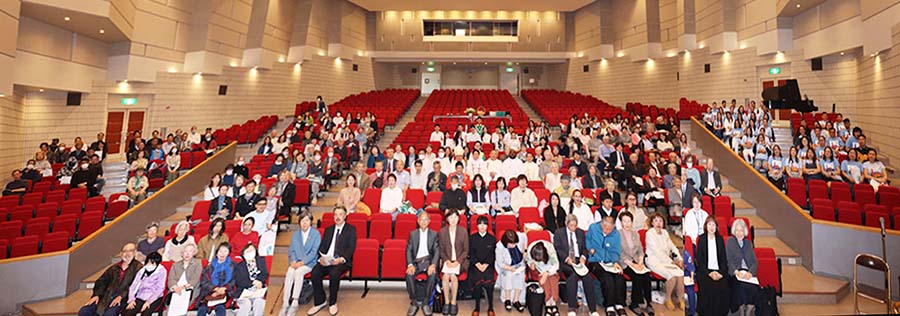
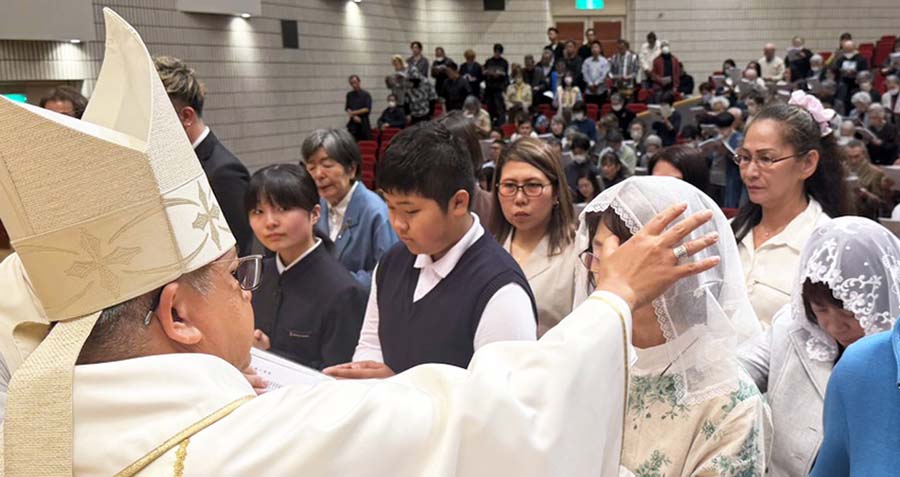
On June 7, the Solemnity of Corpus Christi, more than 300 faithful gathered in Aomori City for a district assembly. The theme of the district assembly was “Blessed are the peacemakers, for they shall be called children of God” (Matthew 5:9). The district held its previous assembly 12 years ago. Bishop Edgar Gacutan and the five priests assigned in the district concelebrated the Eucharist. Deacon Dong-bin Shin assisted and proclaimed the Gospel. After the homily, 12 brothers and sisters received the Sacrament of Confirmation. Representatives of the Namiuchi Catholic Scouts, the Sisters of the Assumption, and the Filipino and Vietnamese communities served various liturgical roles. The program after the Mass featured fellowship lunch and dialogue.
Sanpachi Bloc : Hachinohe Shiocho Church
Completes New Parking Lot
Following approval granted by an extraordinary parish assembly, Hachinohe Shiocho Church completed the paving of a parking lot for 30 vehicles on the former property of the St. Ursula Sisters’ convent. As the central church of the Sanpachi Bloc, Shiocho Church regularly hosts regional gatherings and had long struggled with insufficient parking.
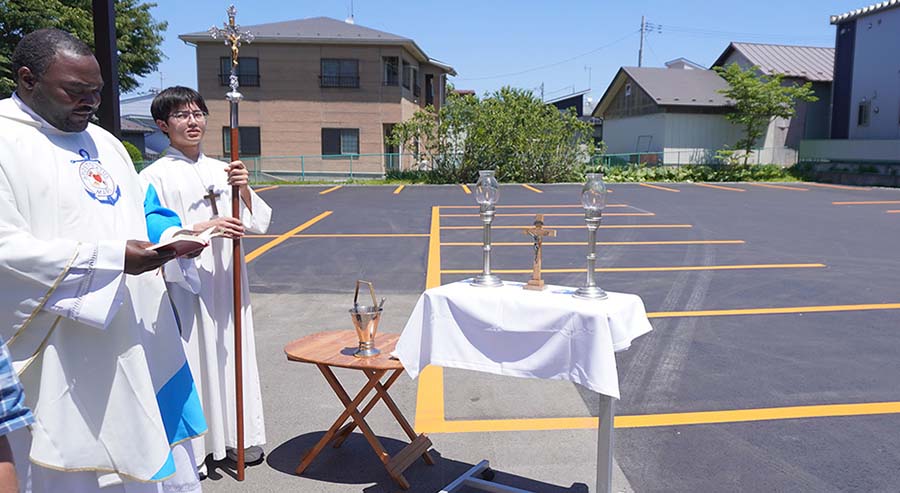
The construction project was completed on time despite rising construction costs. Mr. Hiroshi Maeda of Samemachi Church led the team that supervised the parking lot project. On May 31, 2026, Fr. Justin Luksa blessed the new parking lot before the celebration of the joint Marian Festival of Shiocho and Samemachi parishes.
District 3
Iwate Nanbu(Southern) Bloc : Ichinoseki Church
Launches Parish Website
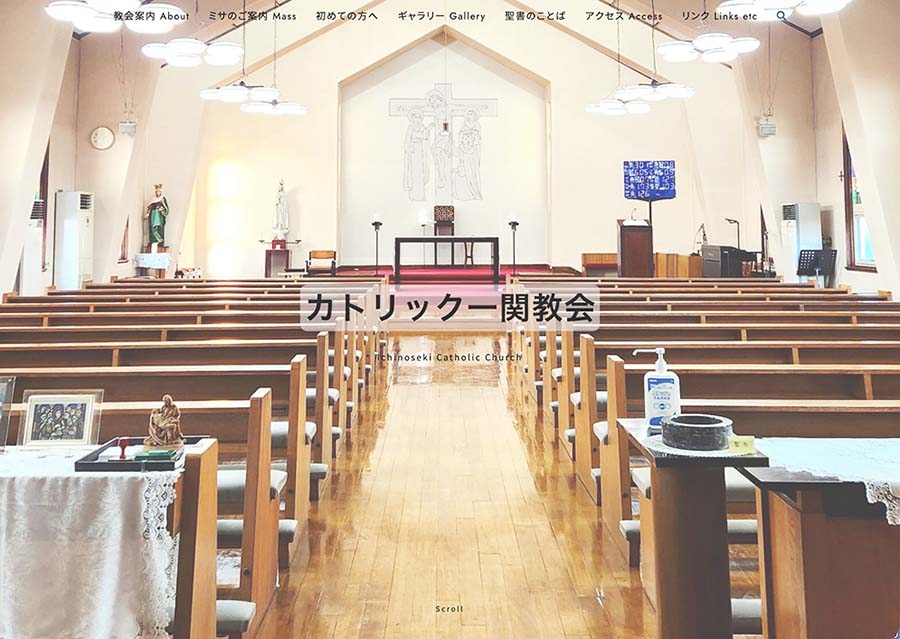
https://www.ichinoseki-catholic.jp
Before Easter 2026, Ichinoseki Church launched its official website to strengthen evangelization and parish communication. Created by a parishioner, with the support of the Public Relations Committee and Fr. Akihiro Watanabe, the website serves both seekers and parishioners by providing church information and spiritual resources. The project also deepened appreciation for the rich history of the parish and the faith of earlier generations. The website will continue to grow with parish news, historical materials, and Scripture reflections.
District 4
Sendai Nanbu(Southern) Bloc : Tatamiyacho Church
Celebrates 110th Anniversary
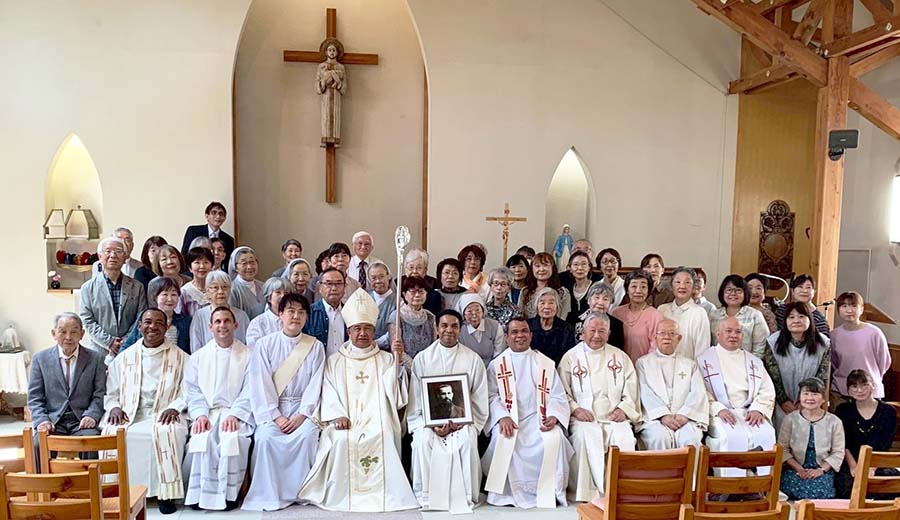
Tatamiyacho Church, founded in 1916, celebrated its 110th anniversary with a Mass presided by Bishop Edgar Gacutan, concelebrated by eight priests and attended by parishioners of Tatamiyacho and neighboring parishes and the Sisters of St. Ursula.
In his homily, Bishop Gacutan reflected on the Church as “a temple still under construction,” emphasizing that the Holy Spirit continues to build up the Christian community despite changing times and declining numbers. He reminded the faithful that Christ, the Good Shepherd, continues to guide and strengthen His people.
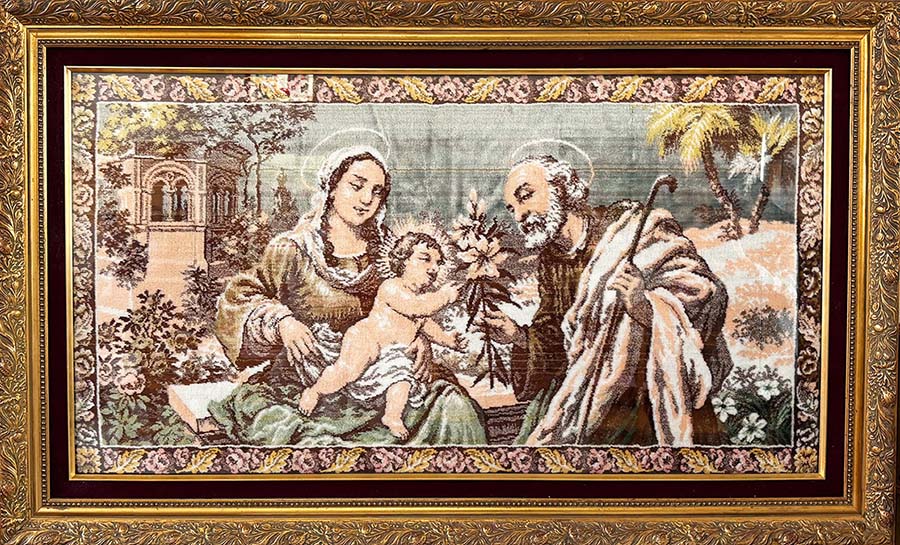
Following the Mass, a Holy Family tapestry once presented by the Vatican to Bishop Kyunosuke Hayakawa, Japan’s first native bishop, was formally donated to the parish and unveiled. A commemorative lecture on the history of the parish and a joyful lunch concluded the celebration.
Looking back with gratitude and moving forward with hope, Tatamiyacho Church reaffirmed its commitment to continue the mission of evangelization as part of the wider mission of the Diocese of Sendai.