
Catholic Sendai Diocese Newsletter No.30 Issue(266)
Table of Contents
- ◇ To contemplate and to give to others the fruits of contemplation
- ◇ BISHOP’S DIARY
- ◇ Faith and Hope Inherited from the Apostles
- ◇ Let there be Peace on Earth, and let it begin with me(“Ten Days for Peace”)
- ◇ Diocese of Sendai “Life, Peace and Human Rights Committee”
- ◇ Wishing for Peace from Our “Little World”
- ◇ Joint Christian Prayer Gathering for Peace
- ◇ Sendai Diocesan Summer Youth Camp 2026
- ◇ NEWS FROM THE DISTRICTS
- ◇ Report from Caritas Minamisoma
To contemplate and to give to others the fruits of contemplation
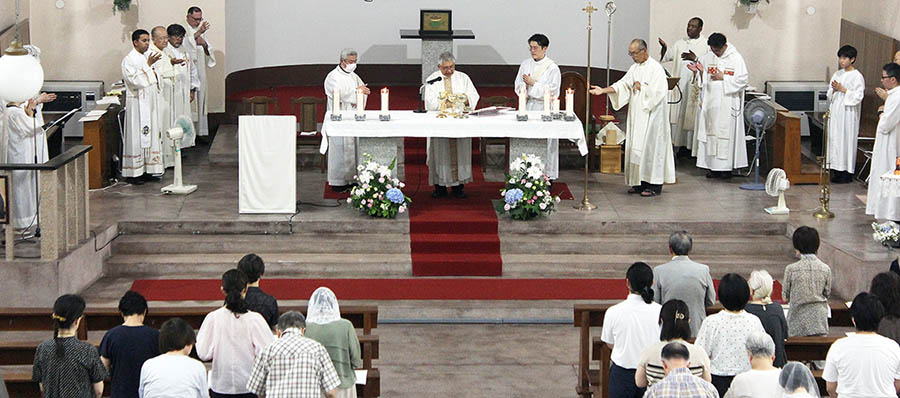
 On August 8, the Feast of St. Dominic, I joined the parish priest, parishioners, and representatives of neighboring parishes in celebrating the 75th anniversary of the dedication of the church of the parish of St. Dominic Kita-Sendai. On this joyful occasion, I expressed my deep gratitude to the Dominican priests and sisters present in the celebration and their predecessors for their dedicated ministry in the Diocese of Sendai.
The spiritual brothers and sisters of St. Dominic, among other groups, have been companions on the faith journey of Sendai diocese.
The Diocese of Sendai traces its origins to the missionary works of the priests of the Paris Foreign Mission Society (M.E.P.), who entered Japan in 1858, after some port cities of the country opened to foreign vessels. On April 17, 1891, the Apostolic Vicariate of Hakodate was established with jurisdiction over Hokkaido and the Tohoku region (i.e., the prefectures of Aomori, Iwate, Miyagi, Fukushima, Akita and Yamagata).
On June 15, 1891, the Apostolic Vicariate of Hakodate was elevated to a diocese. Monsignor Alexandre Berlioz, M.E.P. served as its first diocesan bishop. On August 13, 1912, the Apostolic Prefecture of Niigata was established with jurisdiction over the three prefectures of Niigata, Yamagata, and Akita. After Bishop Berlioz’s retirement, Monsignor Alfred Wood, M.E.P. served as apostolic administrator of the Diocese of Hakodate.
In November 1931, the Diocese of Hakodate was entrusted to the Canada Province of the Dominican Order and Monsignor Andre Dumas, O.P. became apostolic administrator. He was succeeded by fellow Dominican Monsignor Marie-Joseph Lemieux. On March 9, 1936, after receiving permission from the Holy See, Bishop Lemieux moved the seat of the diocese from Hakodate to Sendai and changed the name of the diocese from Hakodate to Sendai.
In 1941, Monsignor Wasaburo Urakawa, from
the Diocese of Nagasaki, succeeded Bishop Lemieux. In December 1952, the district of Hakodate became part of the Diocese of Sapporo. Since then, the four prefectures of Aomori, Iwate, Miyagi, and Fukushima comprise the area of jurisdiction of the Diocese of Sendai.
The source of that brief journey of Sendai diocese is “The Catholic Bishops’ Conference of Japan 2026 Yearbook”.
We look forward with great anticipation to celebrating in 2036 the centennial of Sendai diocese.
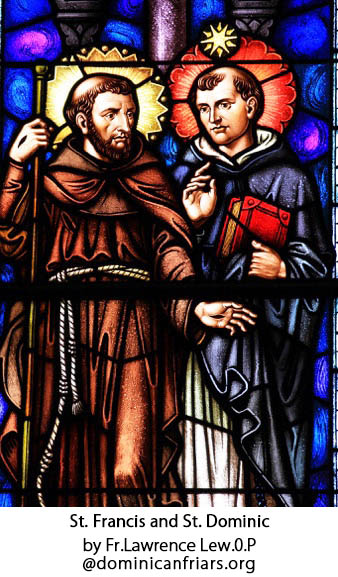
Let us trace further the spiritual connection of the Dominicans with two holy men, who lived during the same period in the long history of salvation.
We observe the period from January 10, 2026 to January 10, 2027 as Year of St. Francis, to commemorate the 800th anniversary of the death of St. Francis of Assisi, known for his simple lifestyle and love of nature. The 800th anniversary of St. Dominic’s death was in 2021.
According to tradition, Dominic and Francis met in Rome when Dominic visited the city for the second time in 1216. The two future saints were seeking approval from the Holy See for their respective religious orders, with the help of their common spiritual benefactor Cardinal Ugolino, the future Pope Gregory IX.
The night before their meeting, Dominic had seen Francis in a vision. When he actually saw Francis, Dominic ran toward him. A close friendship developed between them. To this day, the Dominicans and Franciscans continue the tradition of visiting one another on the feast days of their respective founders as a sign of their unity in pursuing a common purpose.
It is also said that Francis might have influenced Dominic to expand the practice of the vow of poverty in his growing order, while the friars of Francis might have adopted aspects of the Dominican system of rules.
St. Francis and St. Dominic are great gifts of God to us. It is said that holiness begets holiness.
At a time marked by intense religious conflict, St. Dominic’s profound humility, unceasing prayer, and great learning led many people to the Son of the living God. To this day, many people are led to Jesus Christ following an encounter with a Dominican. The Order of Preachers (O.P.) is a fruit of the charism of St. Dominic.
St. Dominic died on August 6, 1221. His last words to his brothers and sisters were: “Have charity for one another, guard humility, make your treasure out of voluntary poverty.” Those words express the heart of the spiritual heritage of the Dominican Order.
“To contemplate and to give to others the fruits of contemplation” is one of the mottos of the spiritual brothers and sisters of St. Dominic. Learning from them, may we also meditate on the words of our Lord and share the fruits of our reflection through our words and deeds.
Bishop Edgar Gacutan, C.I.C.M.
BISHOP’S DIARY
“The Call to Synodal Conversion and the Mission to be Bridges and Bridge-builders in Asia”
The 12th Plenary Assembly of the Federation of Asian Bishops╒ Conferences (FABC)
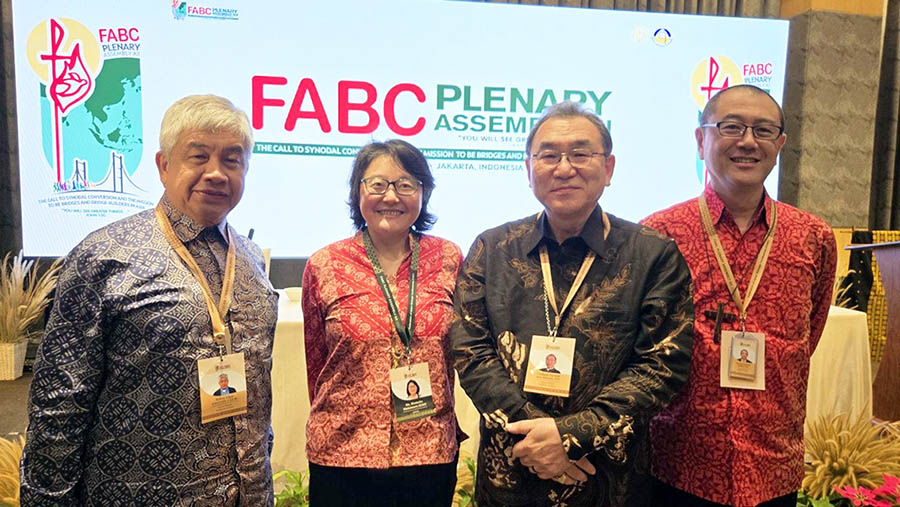
Founded in 1970, the FABC brings together the Bishops’ Conferences of Asia in order to promote unity in diversity, solidarity, collegiality, and cooperation among the Churches in Asia.
The 12th FABC Plenary Assembly was held in Jakarta, Indonesia, July 20-26, 2026, with about 150 participants that included twelve cardinals, bishops, priests, religious and laity. From Japan, Cardinal Tarcisio Isao Kikuchi, Bishop Daisuke Narui, Ms. Momoko Nishimura and I participated.
The theme of the Assembly was “The Call to Synodal Conversion and the Mission to be Bridges and Bridge-builders in Asia”
Synod means “walking together”. We listened and shared experiences and insights on how we bishops walk together with the faithful, priests and religious in making decisions and in being accountable.
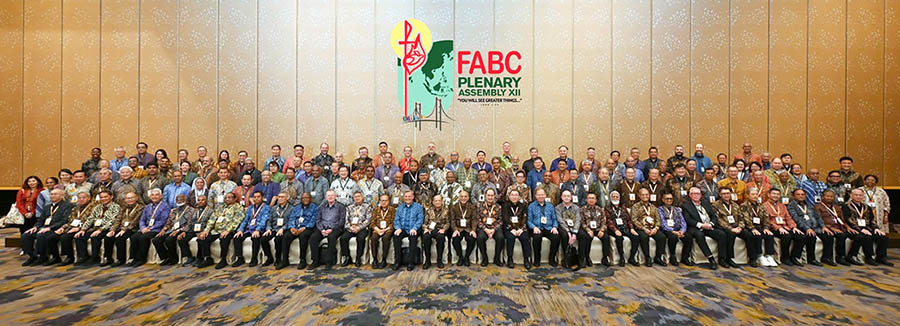
Radio Veritas Asia Facebook
While listening to each other, we experienced the meaning of the promise of Jesus to Nathanael –“ You will see greater things” (John 1:50).
I came back filled with hope, ready to see and respond to the greater things the Spirit is doing in the universal Church, in the world and in our diocese.
Bishop Edgar Gacutan
Faith and Hope Inherited from the Apostles
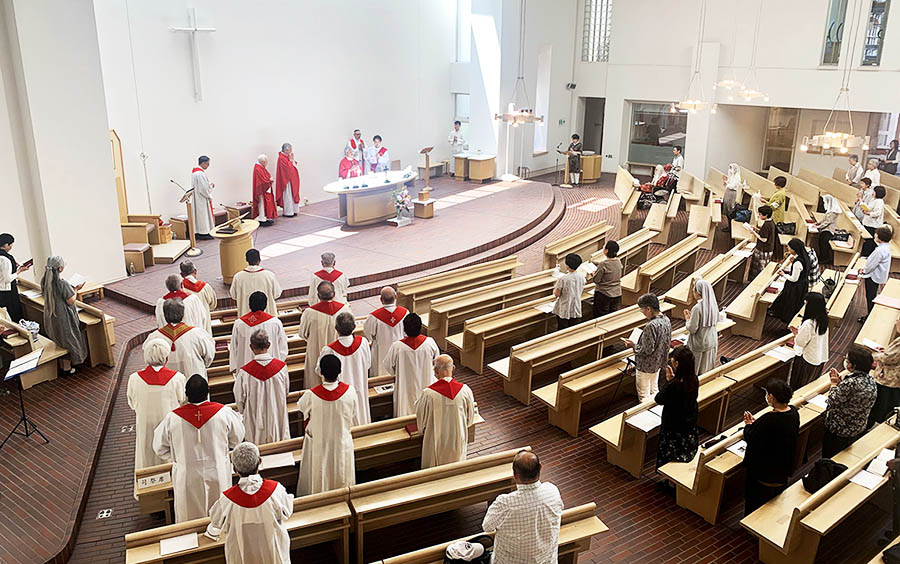
On June 29, the Anniversary Mass of Mototerakoji Cathedral’s dedication was celebrated on the Solemnity of Saints Peter and Paul, with Bishop Edgar Gacutan presiding and about 60 faithful and religious attending.
In his homily, Bishop Gacutan recalled that Peter and Paul were imperfect and different, yet God built the Church through them. Their lives show that God’s love and mercy sustain the Church, not human strength. He encouraged everyone to entrust their anxieties to God, serve faithfully, and use their God-given capacity to love.
The celebration concluded with the hopeful hymn, “The Church Is One.”
Kaoru Iijima
Diocesan Communications Committee
Let there be Peace on Earth, and let it begin with me
(“Ten Days for Peace”)
Catholics in Japan dedicate August 6-15 to reflecting on and praying for peace, a practice instituted by the Japanese Catholic bishops in 1982, in response to the message of Saint John Paul II in Hiroshima in February 1981: “War is the work of man. War is the destruction of human life. War is death. … To remember the past is to commit oneself to the future. …
 I share six of the 35 “Litany for Peace” from a book I have recently reread (And Morning Came: Scriptures of the Resurrection by Megan McKenna, Quezon City: Claretian Publications, 2005) that we can practice. Find the same Litany on spiritualityandpractice.com.
Wash the feet of those who may not walk tomorrow.
Pray for enemies of and the enemies of your nation and ask for forgiveness for them.
Think universally and act locally and globally, join groups that seek to make peace.
Learn a language that is nonviolent. Drop words and concepts that are militaristic, aggressive and disrespectful.
Learn the basics of another religion and practice some of its prayers and disciplines to better understand others.
Learn another language, if only a few words, such as “peace be with you,” hello,””thank you,””what is your name.’
Bishop Edgar Gacutan
Diocese of Sendai “Life, Peace and Human Rights Committee”
The afternoon session of the 13th Study Session on Life focused on the Church’s teaching on peace, human dignity, and social responsibility. Bishop Shinzo Moriyama reflected on Pope John Paul II?s 1981 Hiroshima Peace Appeal, emphasizing that war is humanmade and that humanity also has the power to build peace. He also highlighted teachings from Pope John XXIII, Pope Francis, and Pope Leo XIV, stressing truth, justice, love, freedom, and respect for human dignity as foundations of peace.
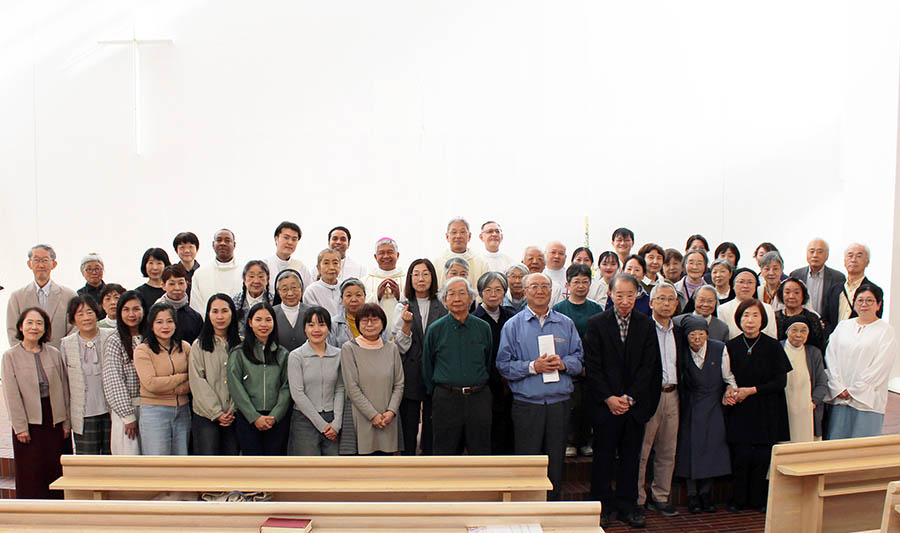
A commemorative “Mass for Peace” followed, presided over by Bishop Edgar Gacutan. In his homily, Bishop Moriyama explained why the Church engages in social issues through Catholic Social Teaching. Christians are called to stand with the poor and vulnerable, reject violence and war, defend human dignity, and promote dialogue, solidarity, and reconciliation. Peace, he emphasized, requires active commitment: “Blessed are the peacemakers.”
Sr. Masako Hasegawa
Diocesan Communications Committee
Wishing for Peace from Our “Little World”
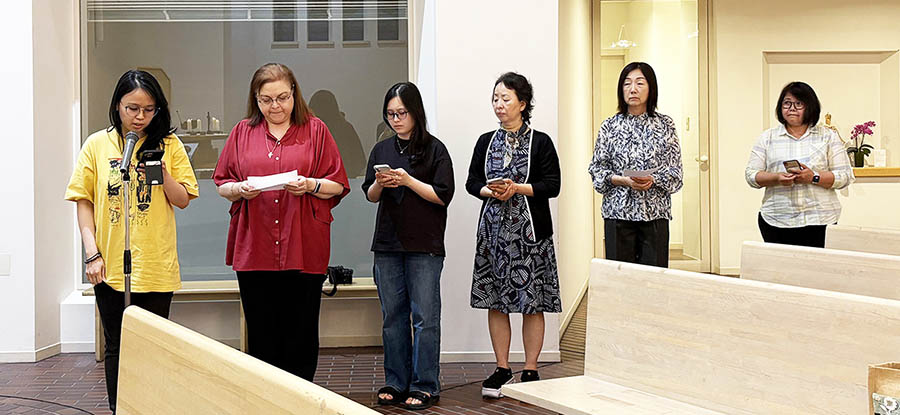
The 33rd Mass for the Abolition of Nuclear Weapons and for Peace was celebrated on July 16 at Mototerakoji Catholic Church, 81 years after the world’s first nuclear test. About 35 people participated, praying in Korean, English, Tagalog, Spanish, Vietnamese, and Japanese. Fr. Ignacio Martinez reminded participants never to forget the tragedy of nuclear weapons and encouraged everyone to make small, everyday efforts toward forgiveness, reconciliation, and peace. He described the multicultural gathering as a “little world” united by faith and Christ’s love.
Kaoru Iijima
Diocesan Communications Committee
Joint Christian Prayer Gathering for Peace
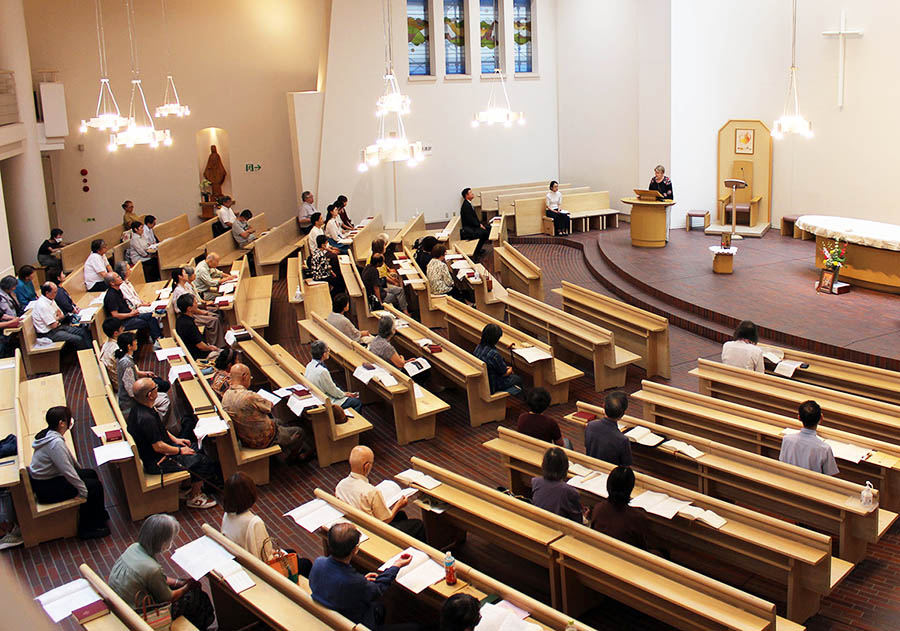
On August 9, Christians from various denominations gathered at Mototerakoji Cathedral to pray together for peace. Ms. Iryna Honcharova, a Ukrainian evacuee living in Miyagi Prefecture, shared her painful experiences of war and emphasized the preciousness and importance of peace.
Sendai Diocesan Summer Youth Camp 2026
The Diocese of Sendai held its diocesan Summer Youth Camp on August 15-16, 2026, at St. Paul Mission Center, bringing together 25 young people from diverse nationalities. The camp offered opportunities for encounter, friendship, prayer, and reflection on how God is present in everyday life.
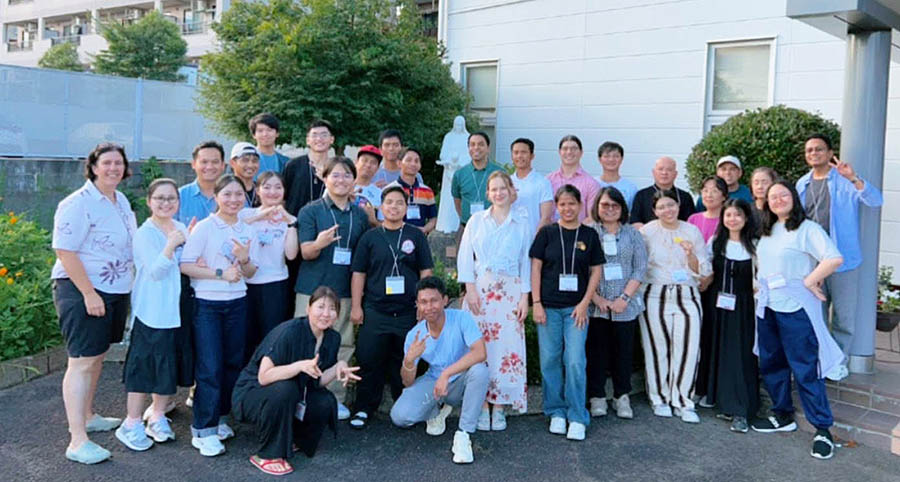
Through talks, activities, dance, and personal sharing, participants reflected on relationships, personal struggles, and the importance of finding silence and listening to their hearts. Prayer was central to the gathering, including the Mass of the Assumption, Taizé prayer, Eucharistic Adoration, and a pilgrimage to Ipponsugi Church, where the youth celebrated Sunday Mass with the local community.
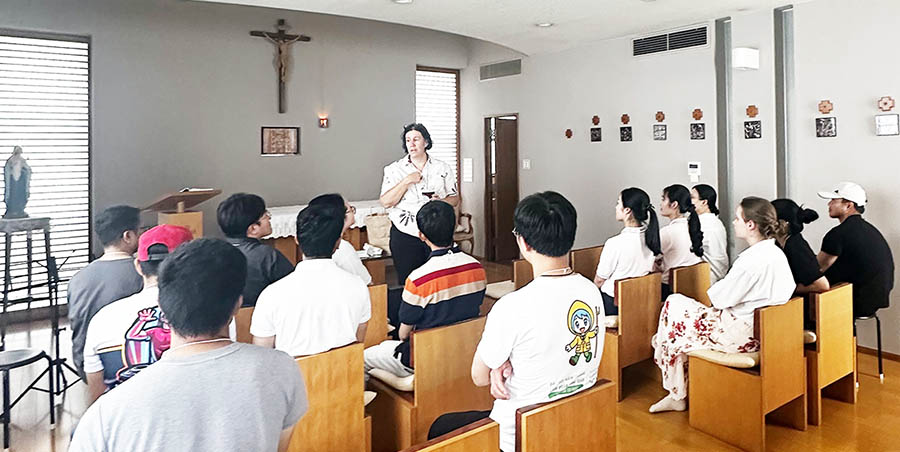
The camp also introduced participants to World Youth Day 2027 in Seoul, giving them a glimpse of the international fellowship, faith, and cultural diversity they can experience there.
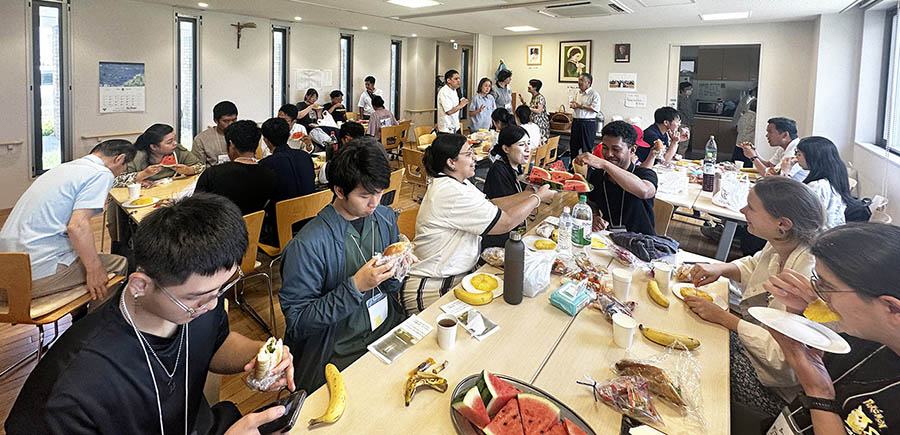
Sharing meals and activities strengthened friendships across cultures. By the end, many described the group as a “new family” and expressed a desire to remain connected and grow closer to Jesus. The camp became a hopeful beginning for stronger youth participation and renewed life in the Diocese of Sendai.
Fr. Armando Romero, CICM
Sendai Diocese Youth Minister
NEWS FROM THE DISTRICTS
District 1
Sanpachi Bloc
The Long-Awaited Overnight Summer Camp at Church
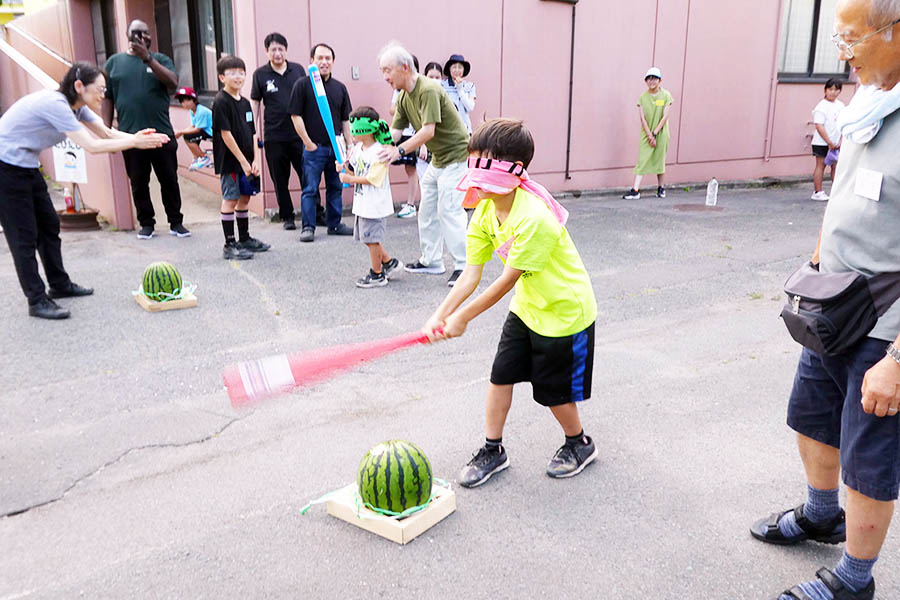
On August 8, 19 children and young people gathered at Hachinohe Shiocho Church for an overnight camp themed: “Let Us Become Instruments of Peace – What Is Peace?” Activities included games, making onigiri, learning about the Democratic Republic of the Congo, fireworks, and preparing for the Children’s Mass. Older participants and Hachinohe Gakuin University students helped lead the camp. Despite rain and a seismic intensity 3 earthquake during the night, everyone remained safe. The children successfully carried out their liturgical roles at Mass the following day.
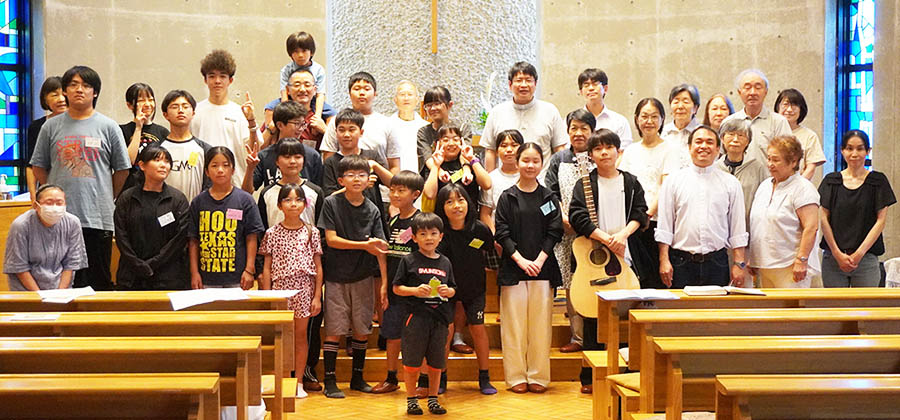
Kazuaki Akasaka
Hachinohe Shiocho Church
District 4
Joint Church School Summer Day Camp:
Let’s Learn About St. Francis of Assisi!
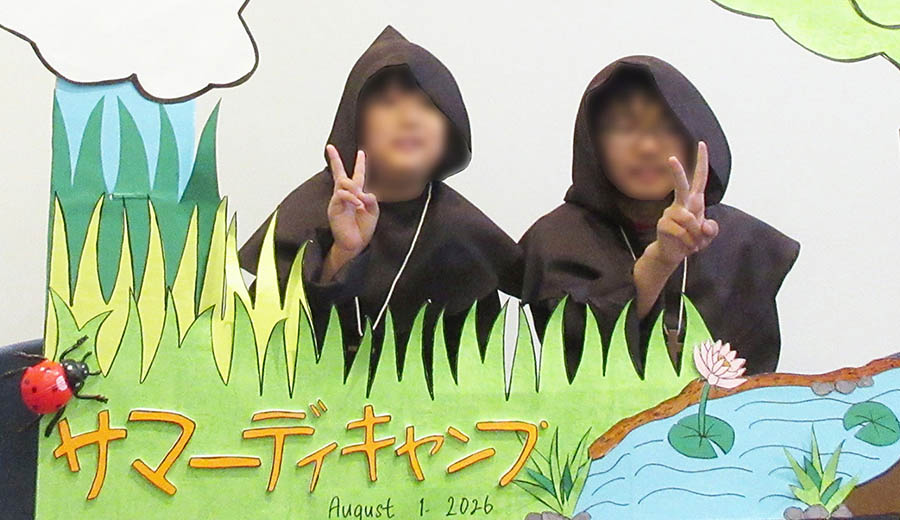
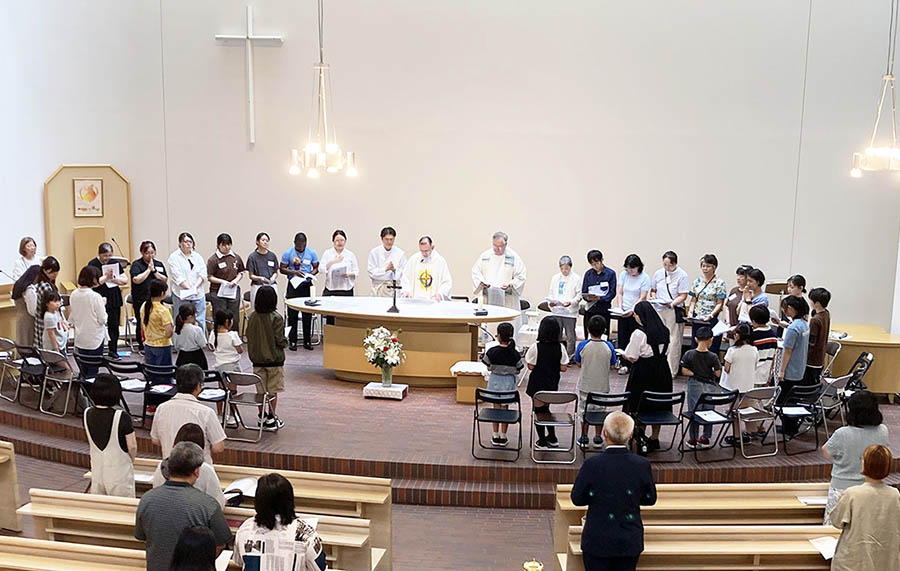
On August 1, 19 elementary and junior high school students joined a Summer Day Camp at Mototerakoji Church. Marking the 800th anniversary of the death of St. Francis, the children learned about his life and reflected on peace and care for the environment through a stamp rally, the Canticle of the Sun, and the Prayer for Peace. They also enjoyed watermelon-splitting, trying on Franciscan and Poor Clare habits, and playing the organ. The day concluded with Mass, during which the children served in various liturgical ministries.
Yoshiko Takase
Church School Leaders’ Association
Kita-Sendai Church
District 5
Aizu Bloc
After My Baptism
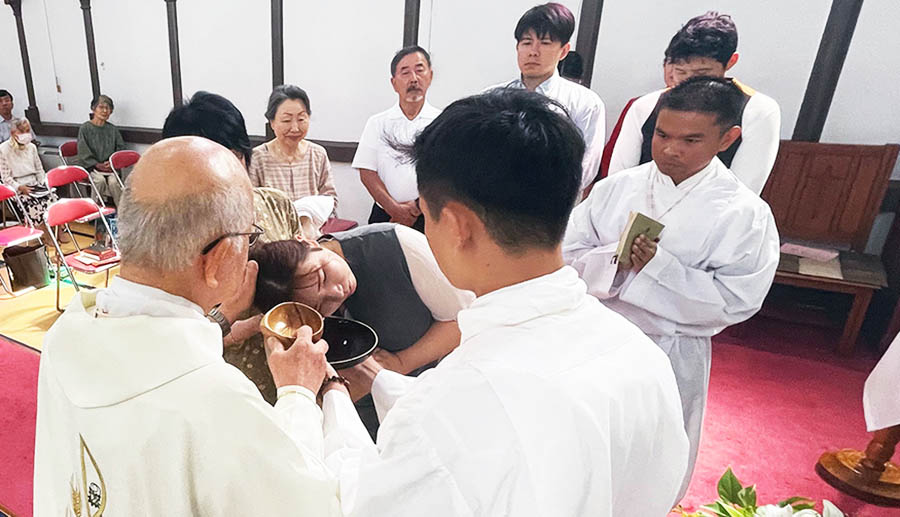
On August 15, 2026, the Feast of the Assumption, I received Baptism and the name Bernadette. After nearly twenty years of searching, struggles, and gradually returning to church, I am deeply grateful that God patiently guided me back to the first church I had visited. Like St. Bernadette, I hope to grow in faith, gratitude, prayer, and small acts of love together with the community.
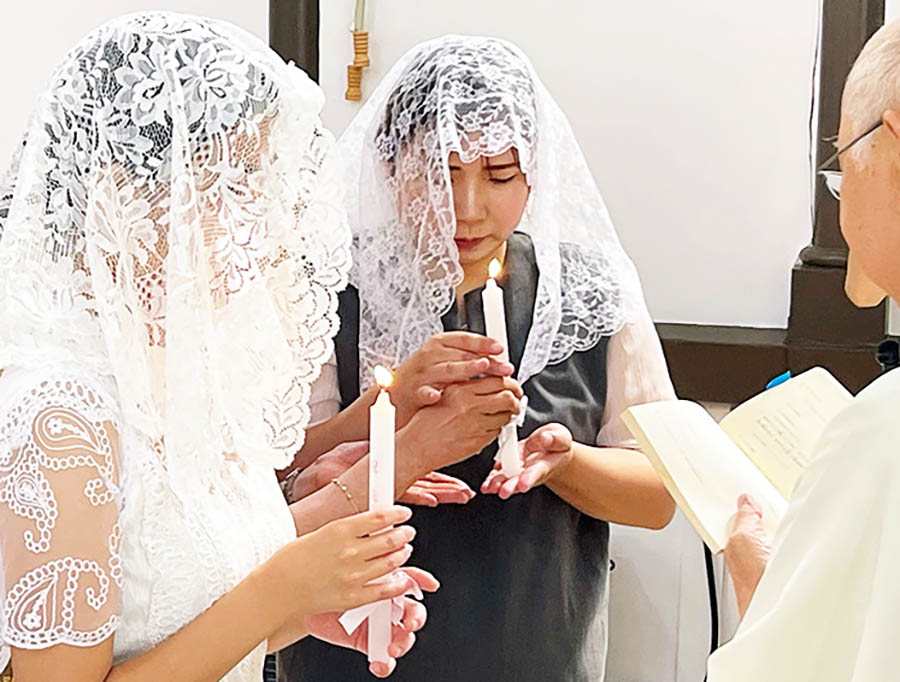
Bernadette Moe Goto
Kitakata Church
Report from Caritas Minamisoma
Participating in the First “Come and See Fukushima”
 From June 24 to 26, I participated in “Come and See Fukushima,” organized by Caritas Minamisoma, inspired by Jesus’ words, “Come and see”(John 1:39). Eight years after my last volunteer experience, I visited Minamisoma, Namie, Futaba, Okuma, and Tomioka. Much had changed: contaminated-soil bags had disappeared, memorial facilities and new buildings had been constructed, and rice fields were flourishing. Yet difficult-to-return zones remain, and relatively few residents have returned to some reopened areas.
Having experienced the Great Hanshin-Awaji Earthquake, I was reminded that disasters affect communities and individuals differently, leaving lasting emotional wounds.
Through talks by Director Mari Nemoto and Bishop Kazuo Koda, and through sharing with participants, I realized the importance of Caritas Minamisoma continuing to accompany local communities. Having come, seen, and understood, I now reflect on whatI can do from here.
Nobuko Suketomo
Former Teacher, Kobe Kaisei Girls’ Junior and Senior High School